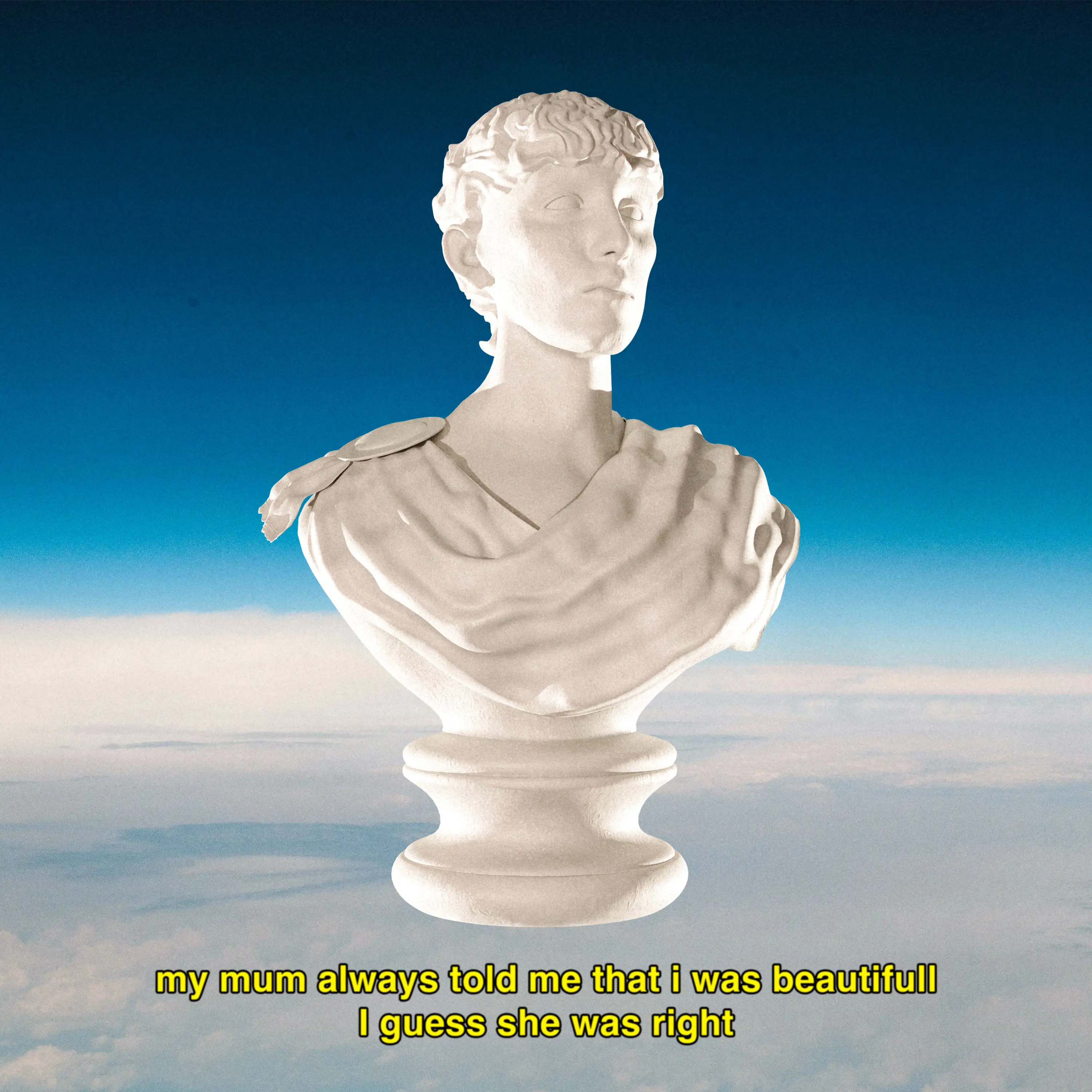
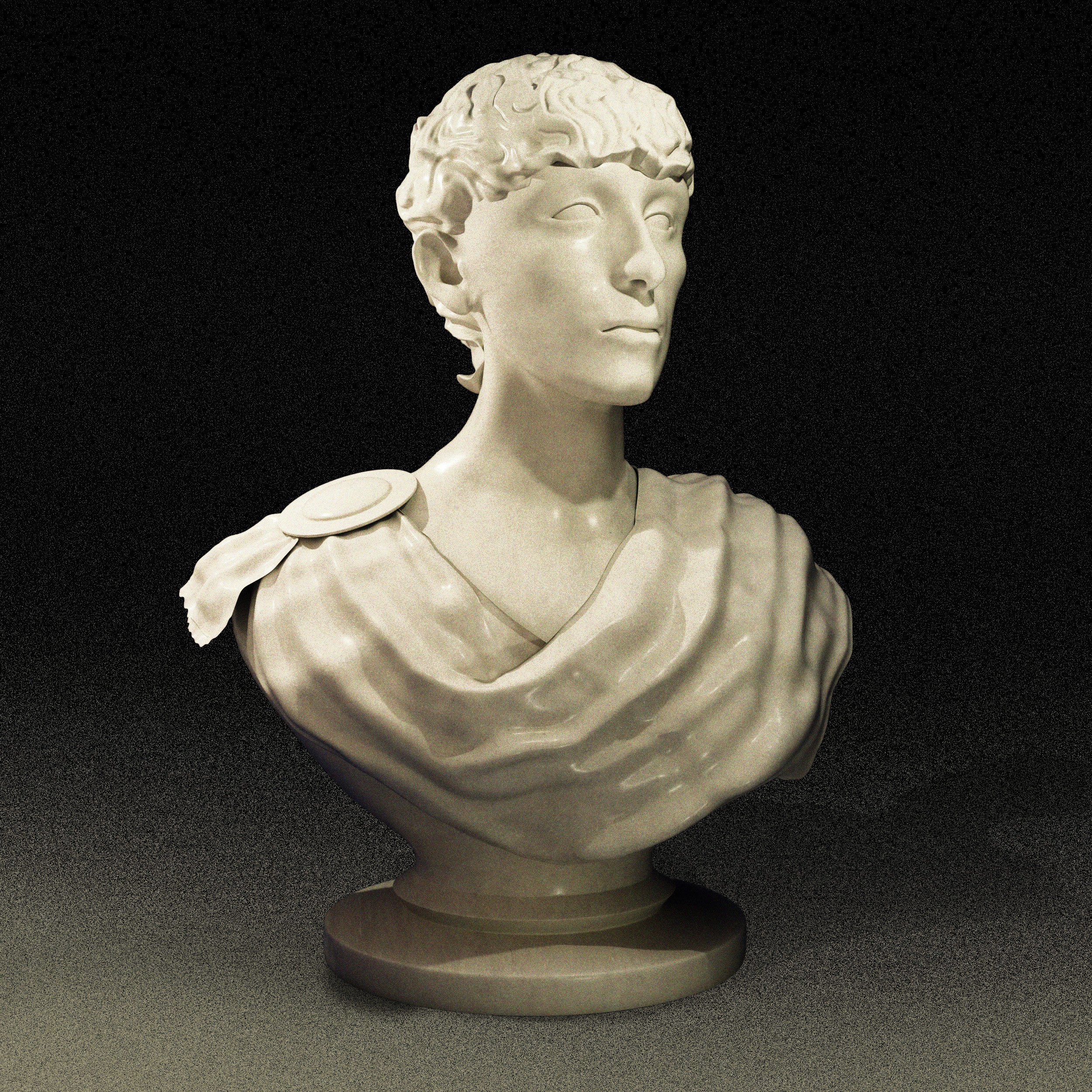
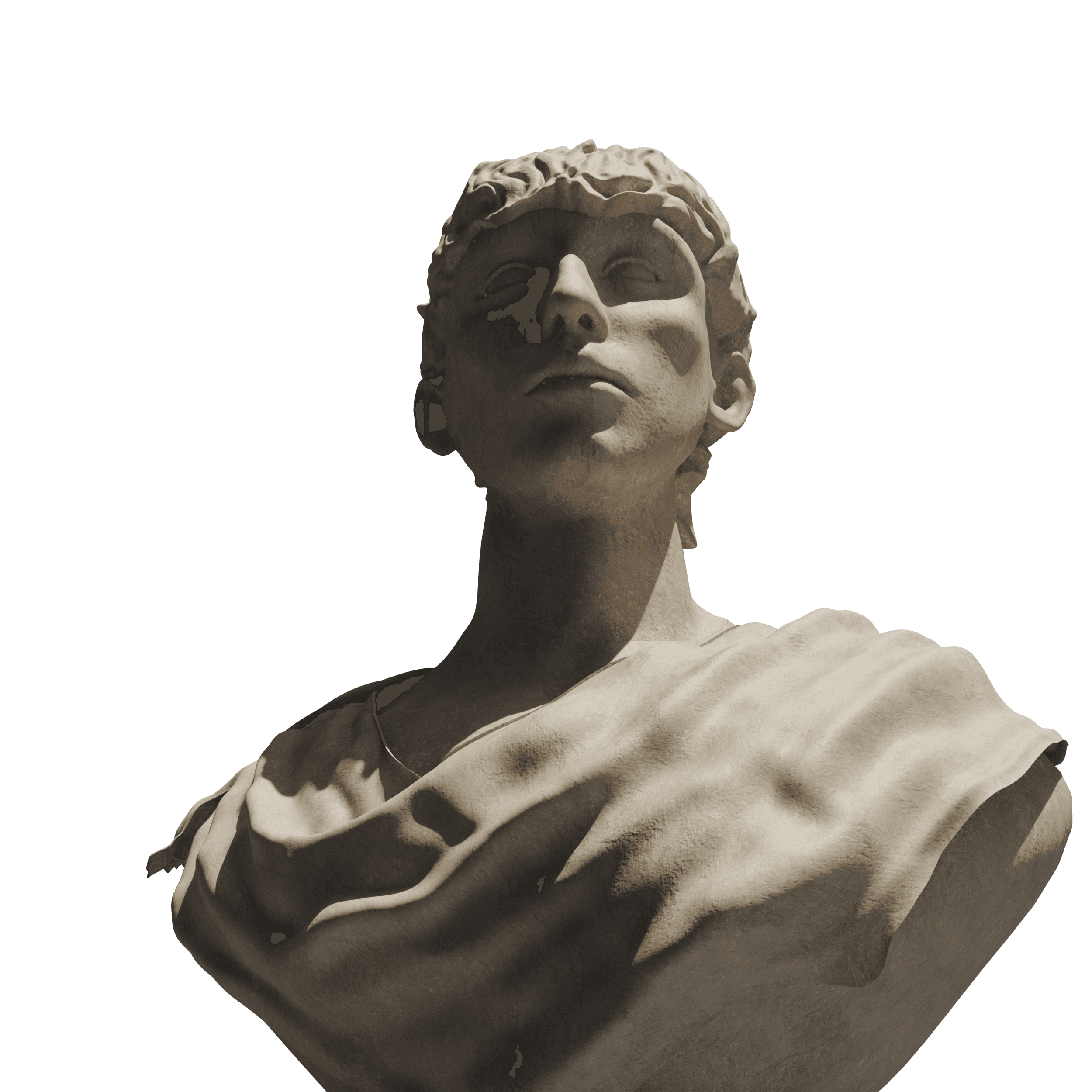
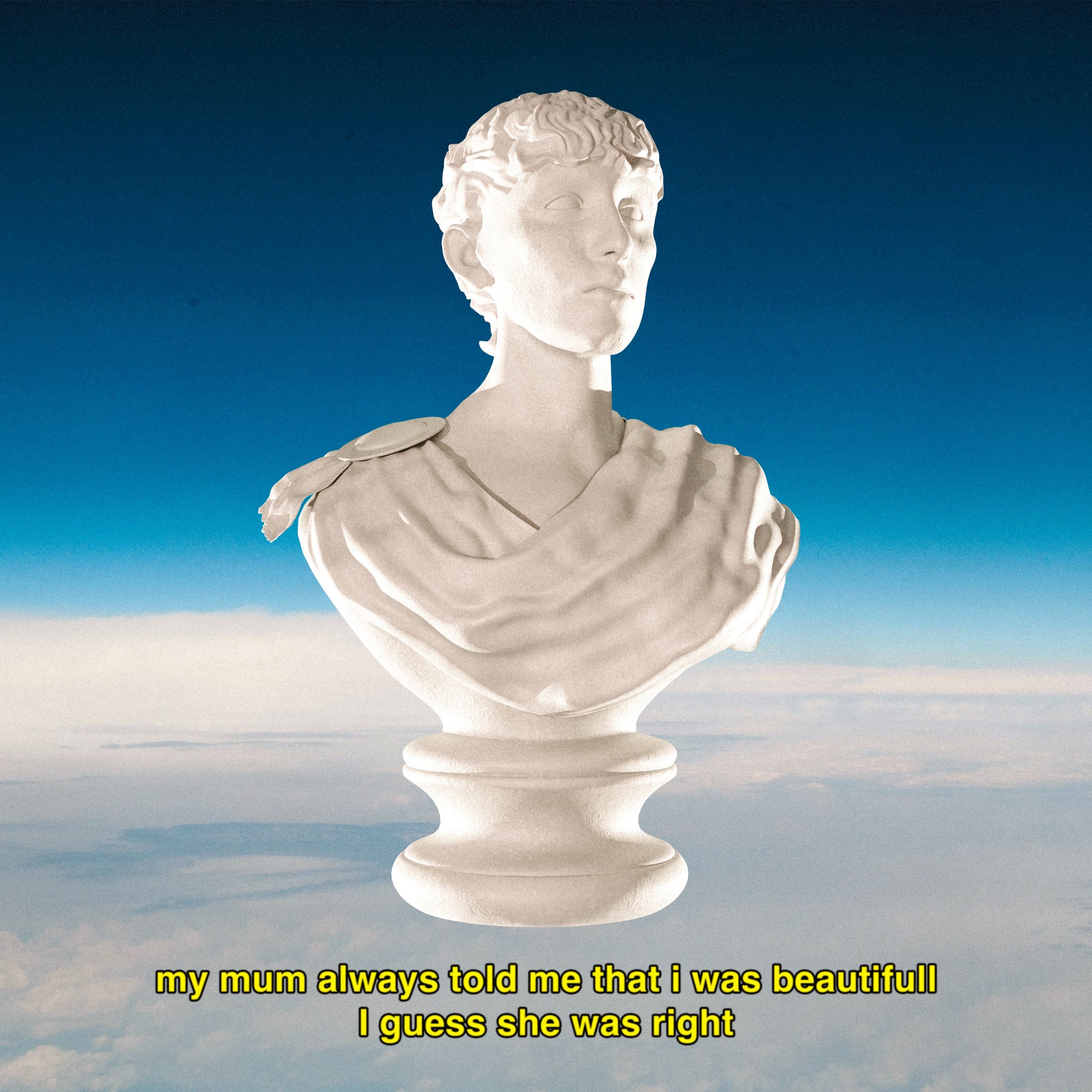
The concept underlying this project is a direct critique of self-sacralization, particularly as it manifests on social media: a critique of influence and of the almost divine, unconditional love of the self. I drew inspiration from self-glorification Roman busts. I reinterpreted this tradition of self-admiration and extended it further by placing the bust in the sky, elevating the subject both literally and symbolically. A statement such as, “My mum always told me that I was beautiful, I guess she was right,” raises a central question: can such an affirmation justify or explain this attitude of self-deification? Rather than providing an answer, the work is intended to provoke self-reflection, encouraging the viewer to question the origins and legitimacy of self-adoration.
I have to admit, this project is a bit tricky to explain—both in terms of its relevance as a product design piece and in its underlying concept. The concept is a direct critique of self-sacralization, especially on social media: a critique of influence, of the almost divine, unconditional love of oneself. I didn’t really know how to express this discomfort, so I took inspiration from Roman busts, where self-glorification is pushed to its extreme. I reinterpreted that element of self-admiration and pushed it even further—that’s also why the bust is placed in the sky, with the phrase "My mum always told that I was beautifull I guess she was right" And to be honest, that’s not even true; my mom never told me that.
It’s therefore a tongue-in-cheek, critical project—a satire of a social phenomenon.
NFACE
NFACE
I have to admit, this project is a bit tricky to explain—both in terms of its relevance as a product design piece and in its underlying concept. The concept is a direct critique of self-sacralization, especially on social media: a critique of influence, of the almost divine, unconditional love of oneself.